Documentation
February 21, 20267 min read
How to Evaluate a Documentation and Training Partner
Choosing the wrong documentation partner is expensive. Here's how to evaluate them before the contract is signed.
Read This Article
If you've worked in industrial maintenance long enough, you remember the binders. Three-ring, tab-divided, occasionally coffee-stained binders that lived on a shelf in the maintenance office or — if you were lucky — in a cabinet near the equipment they described. When something went wrong, you pulled the binder, found the right section, and started cross-referencing diagrams against whatever the machine was actually doing.
The Interactive Electronic Technical Manual, or IETM, was supposed to fix that. And in its early forms, it did — sort of. Searchable PDFs and hyperlinked documents made it faster to find information. But the content itself was still fundamentally static. You were reading the same manual, just on a screen instead of paper.
That era is over. The IETM is becoming something its original designers probably didn't envision: not just a reference tool, but an operational platform that sits at the intersection of documentation, training, diagnostics, and maintenance execution.
The single biggest shift in modern IETMs is architectural. Legacy manuals — even digital ones — tend to be monolithic. A 600-page operations manual is still a 600-page document whether it lives in a binder or a PDF viewer. It was written linearly, organized by chapter, and assumes the reader will navigate it like a book.
Modern IETMs break that model entirely. Content is authored at the component level: a motor has its own description, its own removal procedure, its own preventive maintenance tasks, its own parts list. These modules are assembled dynamically based on what the user needs. A technician replacing a gearbox doesn't see the entire maintenance manual — they see the removal procedure for that specific gearbox, with the correct part numbers, torque specs, and safety lockout steps for their exact machine configuration.
This modular approach has a compounding effect. When engineering issues a revision to a component, every procedure that references it updates automatically. When the same motor appears in three different machine variants, the documentation is authored once and reused. Content stays consistent, revisions propagate instantly, and the days of discovering that a technician was working from a superseded procedure start to disappear.
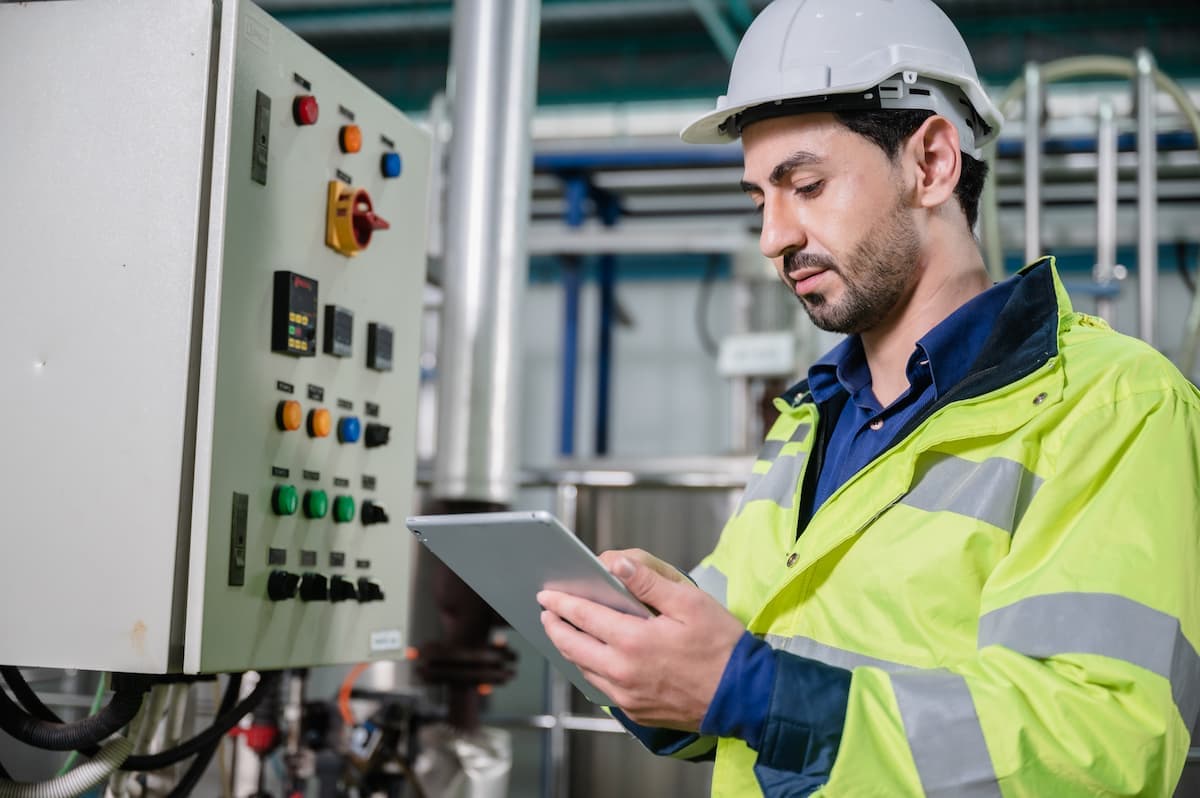
The most interesting IETMs being built today don't just describe equipment — they're connected to it. Integration with CMMS platforms means a technician can open a work order and land directly in the relevant procedure. Ties to parts inventory databases mean they can see whether the replacement component is in stock before they start a teardown. And increasingly, real-time machine data is feeding into the documentation itself.
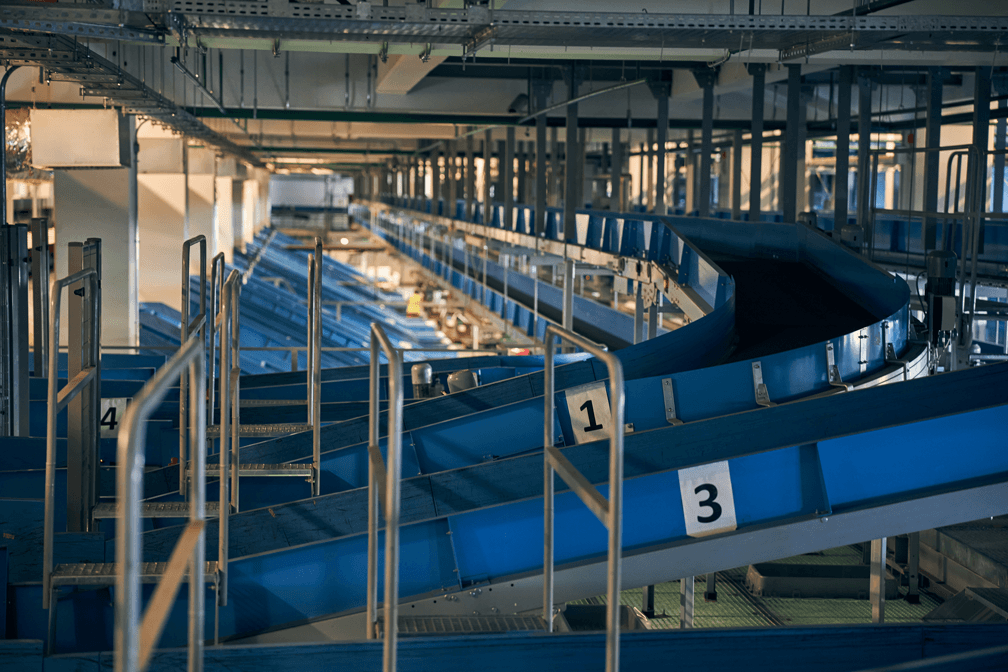
Consider what this looks like in practice. A conveyor system throws a fault code. Instead of the technician copying that code, walking to a computer, searching through a troubleshooting guide, and interpreting the results — the IETM receives the fault, surfaces the correct diagnostic workflow, and walks them through it step by step. If the troubleshooting path leads to a part replacement, the procedure is right there. If it leads to a calibration adjustment, the parameters are populated from the machine's current state.
This is the shift from documentation as reference material to documentation as an active participant in the maintenance process.
The "interactive" in IETM used to mean hyperlinks and maybe a clickable table of contents. Now it means embedded video walkthroughs, rotatable 3D models, exploded-view assemblies where you can isolate individual components, and augmented reality overlays that anchor instructions to the physical equipment through a tablet camera.
The value here isn't novelty — it's comprehension. Some procedures are genuinely difficult to communicate with static illustrations and written steps. Showing a technician a 15-second animation of how a tensioner assembly comes apart is worth more than a page of text and a cross-section diagram. Letting them rotate a 3D model of a gearbox to see the fastener locations on the back side eliminates the guesswork that leads to mistakes.
AR-based overlays take this further by removing the need to look back and forth between a screen and the machine. The instructions are superimposed on the equipment itself. It's early — the hardware is still catching up to the concept — but for complex, high-stakes procedures, the error reduction is significant enough that adoption is accelerating.
Every conversation about technology eventually arrives at AI, and IETMs are no exception. But the application here is more practical than hype. AI-enhanced IETMs can interpret a technician's natural-language question — "why does this diverter stall under load after running for 20 minutes?" — and surface relevant procedures, known failure modes, and historical maintenance data without requiring the technician to know the exact document structure or search terms.
Adaptive troubleshooting is another area where AI adds genuine value. Instead of presenting a static fault tree, the system adjusts its recommendations based on the symptoms described, the equipment's maintenance history, and even which diagnostic steps have already been performed. The troubleshooting path narrows in real time, guided by data rather than guesswork.
We're not talking about AI replacing experienced technicians. We're talking about giving every technician — especially newer ones — access to the kind of contextual reasoning that used to live exclusively in the heads of people with 20 years on the floor.
For years, technical documentation, training programs, and diagnostic tools have existed as separate deliverables maintained by separate teams. The IETM is where these domains are converging. A technician working through a procedure can watch a training clip on the technique involved, review related safety protocols, log their maintenance activity, and trigger a follow-up inspection — all without leaving the platform.
This convergence is what transforms an IETM from a documentation tool into a performance system. It's not just telling technicians what to do. It's equipping them to do it correctly, verifying they've completed the work, and feeding that data back into the organization's maintenance intelligence.
If you're an OEM or system integrator still delivering documentation as a set of static PDFs, the gap between your deliverables and your customers' expectations is widening. End users — especially in logistics, parcel handling, and high-throughput manufacturing — increasingly expect documentation that works the way their other digital tools work: searchable, connected, mobile-ready, and intelligent.
The transition doesn't require scrapping everything and starting over. Existing content — CAD data, legacy manuals, tribal knowledge captured from experienced engineers — can be restructured into modular, component-level architectures and published to modern IETM platforms. At SANTECH, this is work we do regularly, helping organizations migrate from document-centric approaches to structured, interactive systems that scale with their equipment programs.
The IETM has outgrown the manual. It's becoming the digital backbone of how organizations maintain, train on, and operate complex industrial equipment. The question for most companies isn't whether to move in this direction — it's how quickly they can get there.
This is exactly the direction SANTECH Connect takes: approved manuals, procedures, parts information, and training organized by asset and delivered at the equipment through a QR code, with an AI assistant grounded in the approved content.
Let’s discuss how SANTECH can help modernize your technical documentation and training programs.